
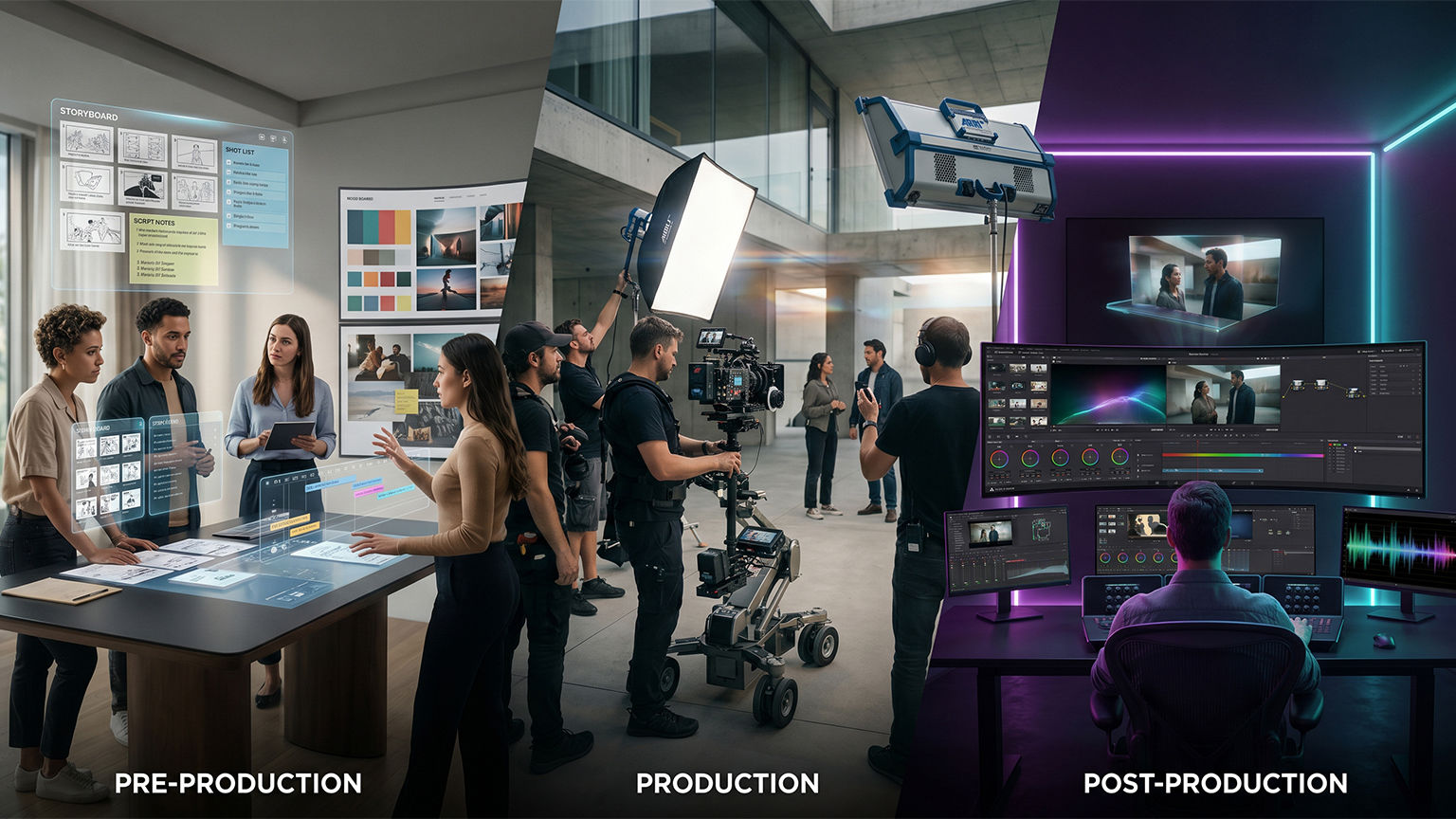
The creation of professional video content is a systematic discipline that has undergone significant refinement. In 2026, the process is no longer viewed merely as a creative endeavor but as a Content Performance Production Framework. This model ensures that every frame and every line of dialogue serves a specific purpose in reaching an audience and achieving a measurable result. To understand how modern video is constructed, one must look at the three distinct phases that turn an abstract idea into a high-impact digital asset.
What is Video Production?
Video production is the entire process of conceiving, capturing, and refining visual content for electronic media. It begins with a strategic objective and ends with a finished file ready for distribution. While the tools for filming have become more accessible, the fundamental requirement for a structured workflow remains. A professional production ensures that the final product possesses technical clarity, narrative coherence, and the ability to hold a viewer’s attention in a crowded digital environment.
Why the Video Production Process Has Changed in 2026
The landscape of 2026 demands more from a video than simple high-definition imagery. Current workflows must account for platform algorithms, audience psychology, and the necessity of repurposing content across multiple formats. Video is now built on a foundation of data. Before a camera is even powered on, producers analyze search intent and viewer retention signals to dictate the creative direction. This shift has turned video production into an interconnected system where the strategy in the first stage determines the success of the final edit.
Overview of the 3 Stages of Video Production
Professional video creation is divided into three primary segments: pre-production, production, and post-production. Each phase represents a different layer of the project’s quality and effectiveness.
| Stage | Main Focus | Key Activities | Impact on Results |
| Pre-production | Strategy and Planning | Scripting, Storyboarding, Research | Message Clarity |
| Production | Technical Execution | Filming, Lighting, Sound Capture | Visual Quality |
| Post-production | Optimization | Editing, Effects, Platform Formatting | Engagement Performance |
Pre-Production Explained: Planning for Performance
Pre-production is the Strategy Intelligence Layer of the video process. It is the most critical phase for ensuring a return on investment. If the planning is flawed, the most expensive cameras in the world cannot save the project. In 2026, this stage involves aligning the creative vision with the specific needs of the target audience.
Concept Development
Every video starts with a core concept. This is the stage where producers define what the video is for and who it is meant to reach. Designers and writers collaborate to ensure the idea is original and capable of standing out. A strong concept acts as the North Star for the entire production team, preventing “scope creep” and unnecessary expenses.
Scriptwriting Strategy
The script is the blueprint for the entire project. In a modern framework, scriptwriting is informed by audience research and search intent. Writers focus on clarity and pacing, ensuring that the most important information is delivered early to secure viewer interest. A well-structured script reduces the time needed during the filming and editing phases because the narrative path is already cleared.
Storyboarding and Visual Planning
Storyboarding involves creating a visual representation of every shot before filming begins. This allows the director to plan the lighting, camera angles, and transitions. It serves as a vital communication tool between the client and the production team, ensuring everyone agrees on the visual style before resources are spent on set.
Audience Alignment
In 2026, pre-production includes a dedicated phase for audience alignment. This involves analyzing the platforms where the video will live. A video meant for a corporate website requires a different psychological approach than one intended for a mobile-first discovery feed. By planning for these differences early, agencies can create content that feels native to the viewer’s environment.
Production Explained: Capturing High-Impact Content
Production is the Execution Quality Layer. This is the physical act of recording the video and audio. While pre-production provides the plan, production provides the raw materials. The quality of these materials determines the perceived authority of the brand and the level of trust the viewer places in the message.
Filming Process
The filming process involves the coordination of camera operators, directors, and technical staff. In 2026, high-impact filming utilizes advanced sensors and stabilization to ensure every frame is crisp. Professional cinematography is not just about clear pictures; it is about using composition to guide the viewer’s eye to the most important elements on the screen.
Lighting and Sound Strategy
Technical quality is often judged more by sound and light than by the camera itself. Clear audio is a primary signal of professionalism. If a viewer struggles to hear the speaker, they will likely stop watching regardless of the visual quality. Similarly, lighting psychology is used to set the mood and ensure the subject looks credible. Proper lighting reduces the amount of work required in post-production to fix shadows or color imbalances.
Performance Direction
The way a person delivers their message on camera affects engagement rates. Whether it is a professional actor or a company executive, direction is required to ensure the tone is appropriate for the brand. In 2026, performance delivery is focused on authenticity. Viewers respond more favorably to speakers who appear confident and knowledgeable, which directly impacts trust and retention signals.
Post-Production Explained: Editing for Engagement
Post-production is the Visibility Optimization Layer. This is where the raw footage is transformed into a cohesive story. In 2026, this stage is seen as the place where performance is maximized. It is not just about cutting clips together; it is about refining the video service in uae to satisfy both human viewers and platform algorithms.
Video Editing Workflow
The editing process begins with organizing the footage and selecting the best takes. The editor then creates a “rough cut” to establish the basic structure. In 2026, editing psychology is employed to manage the viewer’s attention span. This includes placing “hooks” at specific intervals and ensuring the pacing remains energetic. Strategic editing has been shown to improve watch-time and completion rates significantly.
Sound Design and Color Grading
Once the cut is finalized, the video undergoes sound design and color grading. Sound design involves adding music, voiceovers, and ambient effects to create a professional atmosphere. Color grading ensures that the visual tone is consistent throughout the video. This level of polish is what separates a basic recording from a high-quality brand video.
Platform Optimization
The final step in post-production is adapting the video for different platforms. This includes creating vertical versions for mobile feeds, adding captions for silent viewing, and designing compelling thumbnails. In 2026, content repurposing is a standard part of the workflow. A single long-form video might be edited into several short-form clips to extend the lifespan of the content and increase its overall visibility.
Pre vs Production vs Post: Key Differences
The primary difference lies in the nature of the work. Pre-production is intellectual and organizational. Production is physical and technical. Post-production is analytical and refining.
While pre-production sets the ceiling for how good a video can be, production determines the floor. Post-production is the final filter that ensures the message actually reaches the intended recipient in the most effective way possible. One cannot skip a stage without compromising the integrity of the others.
How Each Stage Impacts Marketing Results
Pre-Production: Influences message clarity and ensures the video aligns with the business goals. Strong planning can reduce production costs by up to thirty percent by avoiding mistakes on set.
Production: Affects brand perception and viewer trust. High-quality production values signal that a company is established and reliable.
Post-Production: Directly impacts engagement metrics such as click-through rates and average view duration. It is the stage that ensures the video is actually seen and shared.
Video Production Timeline in 2026
The duration of a video project varies based on complexity. A simple corporate interview might take two weeks from start to finish. A complex commercial with heavy visual effects could take three months.
Pre-Production: 1 to 3 weeks.
Production: 1 to 5 days.
Post-Production: 2 to 6 weeks.
Common Mistakes in Each Stage
Pre-Production: Starting to film without a finished script or a clear objective.
Production: Neglecting audio quality or failing to capture enough “B-roll” footage for the editor.
Post-Production: Over-editing with distracting effects or failing to optimize for mobile viewe
Modern Tools Used in Video Production
The toolkit of 2026 includes traditional high-end cameras alongside AI-assisted software. AI-Enhanced Post-Production, AI is frequently used for script optimization, automated captioning, and initial footage sorting. However, the human element remains essential for creative direction and final storytelling decisions.
FAQ’s
What are the 3 stages of video production?
The three stages are pre-production (planning), production (filming), and post-production (editing and optimization).
Which stage of video production is most important?
Pre-production is often considered the most important because it defines the strategy and prevents costly errors in later stages.
How long does video production take?
Most professional projects take between four and eight weeks, depending on the length of the video and the amount of editing required.
What happens in post-production?
Post-production involves video editing, sound design, color grading, adding graphics, and formatting the video for different platforms.
What is included in pre-production planning?
It includes concept development, scriptwriting, storyboarding, location scouting, casting, and audience research.
How much does video production cost?
Costs vary widely, but a professional corporate video typically starts at several thousand dollars, with prices increasing based on crew size and technical requirements.
Why is editing important in video marketing?
Editing controls the pace and emotional impact of the video, ensuring that viewers stay engaged and understand the core message.
Can AI help in video production?
Yes, AI is used to assist with scriptwriting, voiceover generation, noise reduction in audio, and creating different formats for various social media platforms.
Summary
In 2026, video production is not only a creative process but a strategic content performance system. Brands that approach pre-production, production, and post-production as interconnected stages achieve stronger engagement, better storytelling clarity, and improved visibility across search engines and AI-driven content discovery platforms. This systematic approach ensures that every video produced serves as a durable asset for the brand’s digital presence.
Deprecated: File Theme without comments.php is deprecated since version 3.0.0 with no alternative available. Please include a comments.php template in your theme. in /home/mysticstudio/public_html/wp-includes/functions.php on line 6260